WE MAKE IOWA RIVERS & STREAMS HEALTHIER – JOIN US!
For more than a decade, the Spring Creeks Chapter has been working to care for and recover rivers and fisheries in Iowa. Most of our work focuses on the cold trout streams in our area, including Spring Branch, Paint Creek and Bloody Run.
Beyond our home waters, we work together with TU staff and partners in our Priority Waters, we advocate for our rivers, restore our stream habitat, plant native trees, help connect kids to the outdoors and so much more.
Our conservation and restoration work relies on volunteers and supporters to be successful and thanks to all of you, we are able to:
- Clean up trash along local rivers and streams
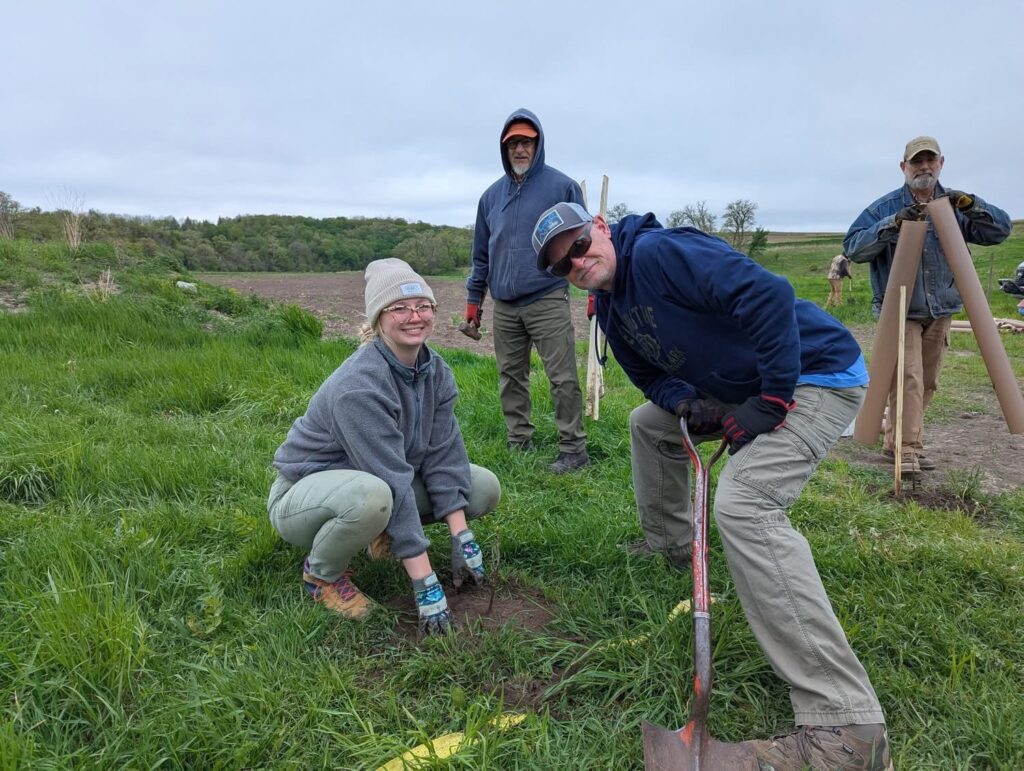
- Plant native trees and shrubs to keep rivers cool and prevent erosion
- Restore degraded habitat through in-stream projects
- Support TU’s national network of Priority Waters through advocacy, volunteerism and contributions
RECENT PROJECTS
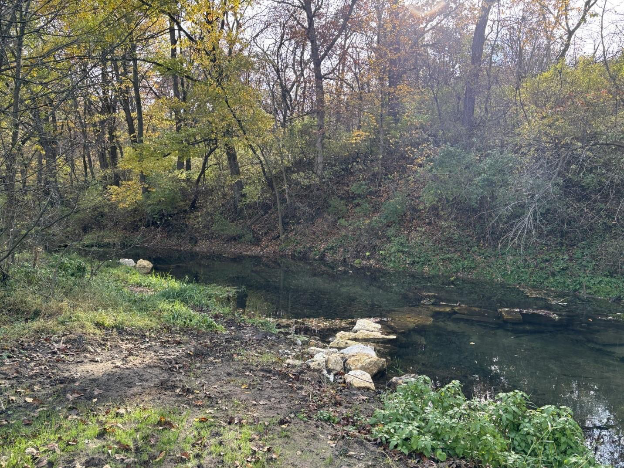
Spring Branch Creek – Completed 2025
Located downstream of the Manchester Fish Hatchery in Delaware County, this section of stream had become filled with deposition material such as sand and silt, resulting in habitat degradation. A plan was developed to assist with this issue. Multiple rock structures were installed, including J-Hooks, Bank Deflectors, Vortex Weirs, and a stream crossing for the landowner to access the other side of the stream. These features help increase the flow in specific areas of the channel, resulting in plunge pools, and exposing the rocky stream bed. These features will increase the diversity of insect life in the stream and allow trout to spawn more effectively. The stream will be assessed in future years, and additional features may be implemented.
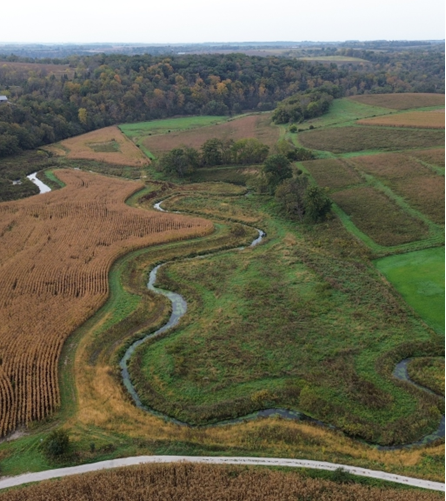
North Bear Creek – Completed 2024: Trout Unlimited, along with the Iowa Department of Natural Resources (DNR), United States Department of Agriculture Natural Resources Conservation Service (USDA-NRCS), and fundingpartners from seven states, completed two projects on North Bear Creek in 2024. North Bear is the most popular trout stream in the state of Iowa and is located near Highlandville. This stream contains both wild Brown Trout and stocked Rainbow Trout populations. Over the years, the stream has become intrenched, resulting in tall vertical banks and little floodplain connectivity. The two projects totaled over 1-mile stream bank shaping and floodplain benching, which removed over 19,000 cu. yards of sediment from the floodplain. Various habitat enhancements were implemented, including both aquatic and terrestrial species. These enhancements included bank hides, wood and rock features, and over 10 acres of native seed plantings. This project is a great example of how partnerships among various groups can positively impact our coldwater ecosystems.
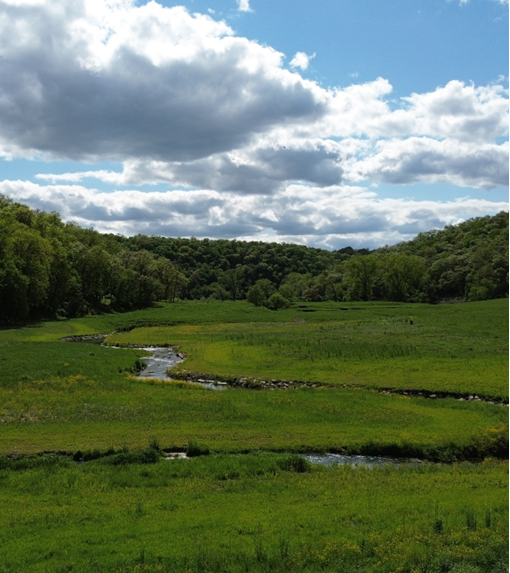
Patterson Creek – Completed 2024
Trout Unlimited, along with the Iowa Department of Natural Resources (DNR), United States Department of Agriculture Natural Resources Conservation Service (USDA-NRCS), and multiple funding partners, completed a project on Patterson Creek, near Waukon, IA in 2024. This section of Patterson Creek flows through an active cattle pasture and has experienced bank failures and habitat degradation. This project addressed both issues with 700 ft. of bank shaping and benching, as well as increasing habitat diversity in the stream. Habitat enhancements includedbank hides as well as wood and rock features. Additional improvements are planned for the upcoming years.
Support our river restoration work today! As an all-volunteer organization, we need your time, expertise and donations to continue our great work!
Protect, Reconnect, Restore & Sustain

Our river restoration work uses Trout Unlimited’s “landscape approach” to conservation in order to address the many issues impacting the health of our rivers, streams and the watersheds in which they flow. It is not enough to simply plant trees along a river to reduce erosion and shade and cool the water. Nor is it adequate to just focus on removing dams and culverts that block fish migration. And just reducing the volume of polluted stormwater runoff flowing into streams – while positive – on its own is not enough to turn the tide.
To truly restore our local rivers, we must do all of the above – and more – so that the entire ecosystem is brought back into balance.
Not only are we working to repair the damage caused by historic activities such as logging, agriculture, industry and development, but now we are also driving to build resilience into our rivers and streams so they can withstand the coming pressures of man-made climate change and the expected increase in droughts, floods, temperature and volatility in the coming years and decades.